

#39
Types of Childbirth

As you approach your due date, excitement builds as you anticipate finally meeting your baby! Childbirth is a major life event, so let's explore the various types of delivery available.
Broadly speaking, there are two main methods of childbirth: vaginal delivery and cesarean section (C-section).
Vaginal delivery can be further divided into "natural childbirth" and "medically assisted childbirth," which includes pain management (such as epidurals). Even if labor-inducing drugs or a balloon catheter are used, if the baby is delivered vaginally, it's still considered a vaginal delivery.

Various Childbirth StylesWhat is Natural Childbirth?
Natural childbirth refers to delivering a baby vaginally without medical interventions, relying on the mother's own strength.
Although medical intervention is minimal, episiotomies (surgical incisions to widen the vaginal opening) are often performed.
There are several different styles of natural childbirth:
1. Freestyle Birth
This involves giving birth in any position that feels natural. The mother may choose to stand, sit, or be on all fours, whichever position allows her to push most effectively.
If you're interested in this option, it's best to choose a midwifery center or a hospital with birthing rooms equipped for it. It's important to select a midwife or hospital with experience in facilitating various birthing positions.
2. Sophrology Childbirth
Sophrology is a technique used not only for childbirth but also in psychiatry and gastroenterology.
It involves using guided imagery and exercises to change one's mindset, relax, and manage pain during labor.
It's necessary to receive detailed instruction at a facility that practices Sophrology. If you're considering this method, it's recommended to inquire whether the staff at your chosen hospital are knowledgeable about Sophrology.
You can also learn about it through books. Since it relies on the mother's own effort, it can be practiced independently.
3. Lamaze Method
The Lamaze method, developed by a French obstetrician, gained popularity in Japan in the 1960s. It focuses on using breathing techniques to manage pain and facilitate a smoother delivery. The "hee-hee-hoo" breathing pattern is well-known. While anyone can learn the technique, it's helpful to practice in childbirth classes or parenting classes to be prepared when labor begins.
4. Water Birth
Water birth, as the name suggests, involves giving birth in water. When labor begins, the mother enters a birthing tub filled with warm water (36-37°C). The buoyancy of the water can help with relaxation, make it easier to change positions, and alleviate pain.
However, there are risks. Using contaminated water or a poorly maintained tub, and inadequate birth management can lead to serious health problems for both mother and baby.
If you are considering water birth, it is crucial to carefully check how the facility conducts these births.
5. LDR
LDR stands for Labor, Delivery, and Recovery. It refers to giving birth in a single room where labor, delivery, and the initial recovery period all take place.
Typically, childbirth involves moving between a labor room, a delivery room, and a recovery room.
Moving, especially from the labor room to the delivery room, can be a significant burden for the mother, and many find it very hard.
LDR rooms eliminate these transitions.
While they may appear like standard private hospital rooms, they are equipped with all the necessary tools for natural childbirth, and the bed can be transformed into a birthing bed. These rooms are designed for comfort throughout the labor, delivery, and recovery stages.
One drawback is that LDR-equipped hospitals are not widely available, so these rooms may be booked far in advance.
6. Painless (Pain-Relieved) Delivery
To reduce pain during vaginal delivery, painless or pain-relieved delivery is available.
For these deliveries, epidural anesthesia is used during labor to lessen the pains of labor and delivery.
In epidural analgesia, an anesthetic is administered into the epidural space near the spinal cord to reduce labor pains. A thin catheter is inserted into the back to deliver the anesthetic.
Reducing pain can help the mother remain calm and avoid panic, and it can also reduce physical and emotional strain.
However, even with an epidural, some pain may still be felt. It's also possible for the procedure to be too late if labor progresses rapidly. Furthermore, there can be potential side effects, such as slowed labor or other complications. It's important to gather sufficient information and consider this carefully.
Pain management methods are not offered at every hospital, so if you desire one, consult your doctor or midwife first.


Medically AssistedVaginal Deliveries
1. Vacuum Extraction
Vacuum extraction is used when labor is not progressing due to weak contractions, and the baby needs to be delivered quickly.
A vacuum cup is attached to the baby's head to help guide and pull the baby out.
A temporary swelling may appear on the baby's head but typically disappears within 2-3 days.
2. Forceps Delivery
Similar to vacuum extraction, forceps delivery is used when labor stalls and the baby needs to be delivered quickly. Forceps, large tong-like instruments, are used to grasp the baby's head and help guide and pull the baby out. There is a small risk of bruising or injury to the baby's face.
Marks from the forceps may appear on the baby's face, but these usually disappear within 2-3 days.
Because forceps delivery requires significant skill, it is becoming less common.
3. Cesarean Section (C-Section)
A C-section is performed when there are risks to either the mother or baby that make vaginal delivery difficult. Under anesthesia, an incision is made in the abdomen and uterus to deliver the baby.
C-sections are indicated in cases of placenta previa, serious hypertensive disorders of pregnancy, placental abruption, prolonged labor, and multiple births (twins, triplets, etc.), as well as many breech presentations.
There are planned C-sections, performed when vaginal delivery is determined to be unsafe in advance, and emergency C-sections, performed when complications arise during vaginal labor.
The decision to perform a C-section is made by the doctor, not at the request of the pregnant person.
Childbirth is an experience that may not happen often in life. Memories of childbirth remain vivid for years. To make this valuable experience a positive one, it's important to understand the different birthing methods and choose a facility that aligns with your preferences.
It's recommended to create a birth plan outlining how you envision your childbirth and early parenting experience. Writing this down can help solidify your ideas, and it's crucial to discuss these details with your partner. Communicating your preferences to your doctor and midwife beforehand will help ensure a more satisfying birth experience.

Seeking feedback on
content and childcare issues
We are always looking for your concerns that you would like to see addressed in future issues of "Ask the Midwife". Please send us your opinions, impressions, and concerns about childcare using the inquiry form.Please feel free to contact us if you would like to receive a “Ask the Midwife” leaflet.
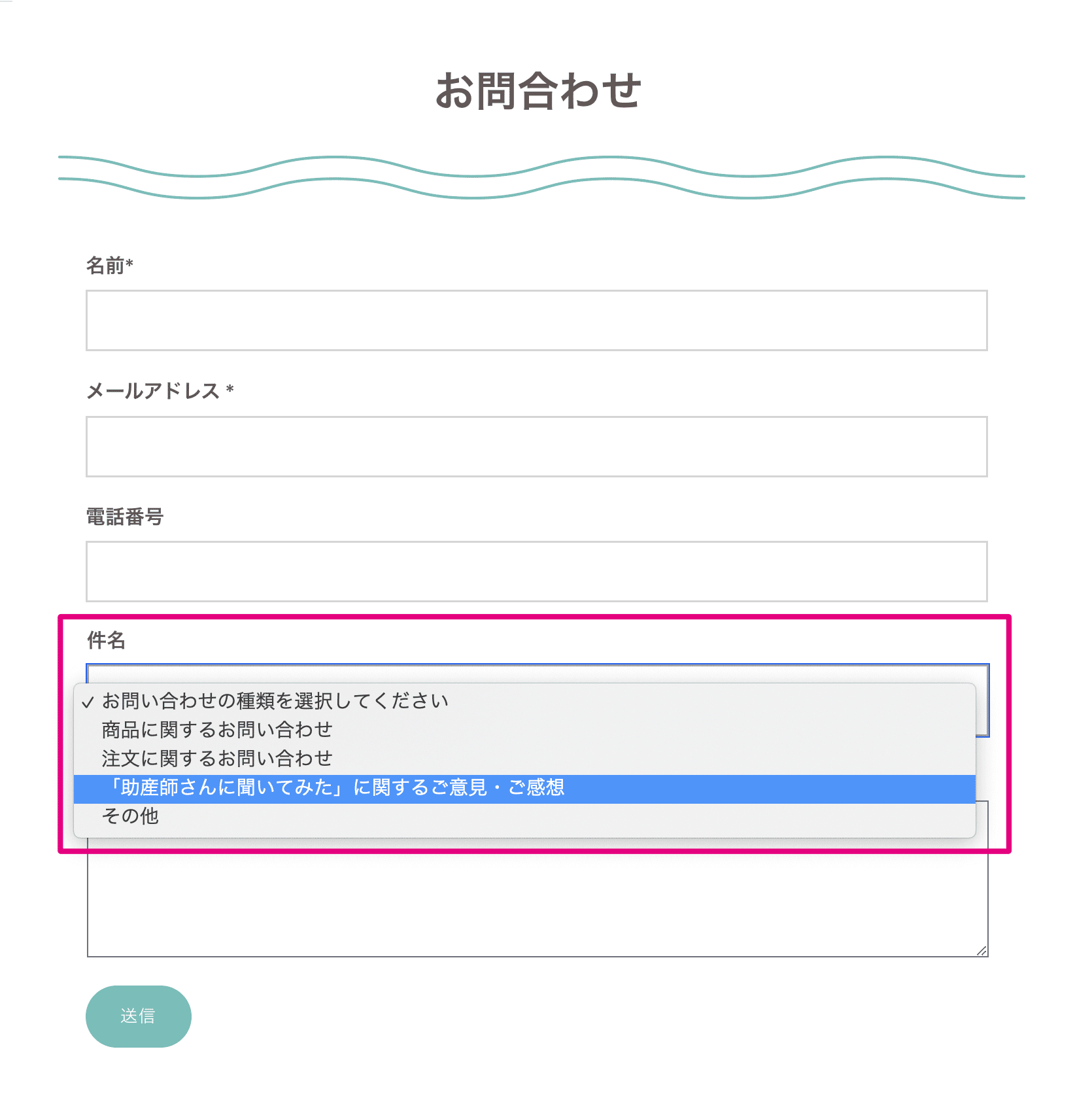
Please select your opinion or comment about "I asked midwife" in the subject field of the inquiry form, enter the content, and send it to us.
- ● We may contact you to confirm the contents.
- ● We cannot promise that we will reply to you or feature you in an article, etc.
Updated on the 2nd and 4th Thursday of each month
Next time... Thursday, June 26, 2025 Update
Enjoy!



Midwife Yoko Nambu
After graduating from Tokyo Medical and Dental University School of Nursing and obtaining a national nursing license, and graduating from the Japanese Red Cross School of Midwifery and obtaining a national midwifery license, she worked as a midwife in the obstetrics and gynecology ward of Tokyo Medical and Dental University Hospital, attending over 300 births and picking up babies. After that, she established "Toraube Inc.", a consultation office mainly for women's body. As a woman's ally, she provides consultation for problems at all ages. She believes that women should understand their own body as their own. She believes that this will lead to the solution of all problems and deals with them on a daily basis.
Her hobbies include traveling with her husband, listening to movies and music, and playing healthy mahjong.
What I want you to know from my experience
supporting many mothers as a midwife.


Blog where midwives attend to the anxieties many moms and dads have about raising their children

