

#46
What Is a Midwife?

The Japanese word josanshi means “midwife” in English.The word “midwife” comes from “mid,” meaning “with” or “together with,” and “wife,” meaning “woman.” So literally, it refers to “someone who is with women.”
Midwives are professionals who understand women deeply, though for many people, their work may still seem somewhat mysterious.
In this article, we’ll take a closer look at midwives so that you can feel more familiar with this important profession.

From Pregnancy to PostpartumMidwives’ Role in Maternal and Child Health
〇 How to Become a Licensed Midwife
Let’s first look at how one can obtain midwifery qualifications in Japan.
Under the current system, the following requirements must be met:
-
1. You must be female.
In countries such as the U.S., the U.K., and Australia, there are male midwives. However, in Japan, midwives must currently be women. -
2. You must pass the national nursing examination.
Without a nursing license, you cannot become a midwife. Some four-year nursing universities offer programs that combine both nursing and midwifery education within the same year, but if you fail the nursing exam, even passing the midwifery exam won’t qualify you as a midwife. -
3. You must pass the national midwifery examination and obtain a midwifery license.
Those who already hold a nursing license can attend a midwifery training school to complete a midwifery program, which qualifies them to take the national midwifery exam. The pass rate for those who complete a specialized midwifery course is over 95%.
〇 A Brief History of Midwifery
Before World War II, midwives were known as sanba-san (“birth ladies”) and mainly assisted with home births, playing a key role in supporting the health of mothers and children in their communities.
In 1948, the Public Health Nurses, Midwives, and Nurses Act was enacted, and the title sanba was officially changed to josan-fu (“midwife”). At that point, a national examination became mandatory.
In 2001, the title was changed again from josan-fu to josan-shi.
kangofu (“female nurse”) was changed to kangoshi (“nurse”), making the term gender-neutral and allowing male nurses to share the same title.
〇 The Work of a Midwife
Midwives provide guidance and support for mothers and babies from pregnancy through postpartum, including consultations and assistance during childbirth. They may also be involved in fertility counseling, parenting education, and guidance for adolescents.
Today, since most births occur in hospitals, most midwives work in medical facilities. There, they assist in deliveries, perform breast care and newborn bathing, check the health of newborns, guide new mothers in childcare, and offer emotional support and advice to pregnant women who may be feeling anxious or mentally unstable.
At birthing centers (josanjo), midwives assist only in normal pregnancies and natural deliveries, without the use of drugs or medical instruments.
They also play active roles in their communities, offering health counseling and educational programs on topics such as prenatal classes, family planning, and parenting.


The Biggest Difference Between Midwives and Nurses:Assisting with Childbirth
Many people say they can’t tell the difference between nurses and midwives when they see them in hospitals wearing the same uniforms.
A nurse’s main role is to assist doctors with medical treatment and care for the sick or injured, as well as to support hospitalized patients.
In obstetrics and gynecology, nurses help patients through difficult situations such as miscarriage or stillbirth and support pregnant women who may be emotionally unstable due to hormonal changes or childbirth anxiety.
This field requires knowledge and skills from both internal medicine and surgery, covering care from adults to newborns.
During childbirth, midwives are authorized to assist with normal deliveries without a doctor’s supervision.
Thus, the key difference between nurses and midwives lies in this ability to independently assist in childbirth. However, within hospital settings, much of their daily work overlaps and involves general nursing care.
Currently, about 90% of midwives work in medical institutions.
At the same time, more midwives—like myself—are starting their own companies, motivated by the desire to make a difference for women.
Just as there are midwives who devote their careers to delivering tens of thousands of babies, there are also those who seek to broaden the scope of midwifery from a wider perspective—focusing on supporting women throughout all stages of life. I hope to see more midwives take on that challenge in the future.

Seeking feedback on
content and childcare issues
We are always looking for your concerns that you would like to see addressed in future issues of "Ask the Midwife". Please send us your opinions, impressions, and concerns about childcare using the inquiry form.Please feel free to contact us if you would like to receive a “Ask the Midwife” leaflet.
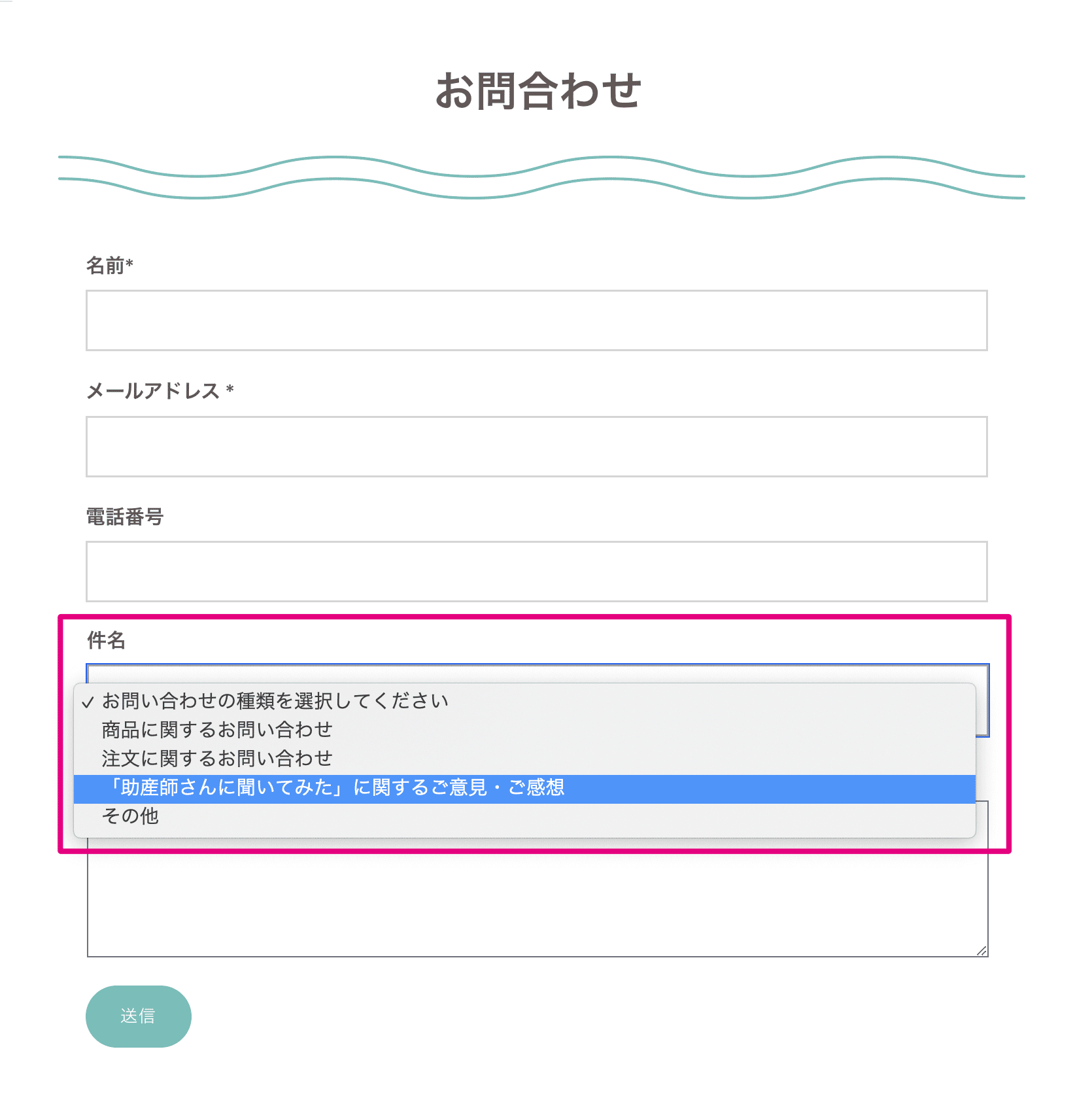
Please select your opinion or comment about "I asked midwife" in the subject field of the inquiry form, enter the content, and send it to us.
- ● We may contact you to confirm the contents.
- ● We cannot promise that we will reply to you or feature you in an article, etc.
Updated on the 2nd and 4th Thursday of each month
Next time... Thursday, October 9, 2025 Update
Enjoy!



Midwife Yoko Nambu
After graduating from Tokyo Medical and Dental University School of Nursing and obtaining a national nursing license, and graduating from the Japanese Red Cross School of Midwifery and obtaining a national midwifery license, she worked as a midwife in the obstetrics and gynecology ward of Tokyo Medical and Dental University Hospital, attending over 300 births and picking up babies. After that, she established "Toraube Inc.", a consultation office mainly for women's body. As a woman's ally, she provides consultation for problems at all ages. She believes that women should understand their own body as their own. She believes that this will lead to the solution of all problems and deals with them on a daily basis.
Her hobbies include traveling with her husband, listening to movies and music, and playing healthy mahjong.
What I want you to know from my experience
supporting many mothers as a midwife.


Blog where midwives attend to the anxieties many moms and dads have about raising their children

