

#60
Baby’s Head Shape


It’s a common concern for many parentsBaby’s Head Shape
Many parents are concerned about the shape of their baby’s head.
Today I will explain about head distortion.
《 Caput Succedaneum 》
I assume that some of you may have been surprised to see something like a lump on your baby’s head immediately after their birth.
This is called caput succedaneum. The baby’s head gets compressed when they pass through the narrow birth canal, but the pressure is released soon after they come out. As a result body fluids, such as lymph, then collect in that area and form a lump.
Caput succedaneum is more likely to occur and the degree of deformation is larger when the pressure from the birth canal is strong or when the baby spends a long time in the birth canal. Therefore, it is more common in babies who were in the birth canal for a long time due to difficult labour.
Usually, it disappears naturally within 2 to 3 days, or at most a week, so please rest assured that no treatment is necessary.
《 Cephalohematoma 》
This is caused by pressure when passing through the birth canal during delivery or by mechanical forces such as suction or forceps delivery. Cephalohematoma is seen in approximately 1% to 2% of all births, but it generally remains a temporary hemorrhage and natural healing can be expected.
Unlike caput succedaneum, cephalohematoma is bleeding under the periosteum, so it does not spread beyond the bone sutures and is limited to a single bone area of the skull. Furthermore, the protrusion often becomes more distinct some time after birth. Even if it is not very noticeable on the first day, the lump may become clear a few days later.
《 Head Distortion 》
Many fathers and mothers may feel anxious, wondering if it is okay for their baby's head shape to be distorted. Because a baby's head is very soft, it is common for the shape to change depending on the direction or posture in which they sleep.
In many cases, the head shape changes with growth, and mild cases may naturally become less noticeable. However, it has recently become understood that depending on the degree of distortion, there are cases where it is difficult to heal naturally.
Generally, it is said that a baby's brain doubles in size from birth by six months of age and reaches 90% of an adult's size by two years old. To accommodate rapid brain growth, a baby's skull is divided into seven pieces. The joints between these bones are called sutures. If these sutures fuse earlier than usual, the skull cannot expand, resulting in head distortion. Depending on the degree, observation is often possible, and if there are no obvious abnormalities in the skull's condition or developmental level, regular inspections and follow-up observations will be conducted. In rare cases where morphological abnormalities of the skull are clear or it is judged that the brain will be affected by high cerebral pressure, surgery may be considered.
Regarding the level of severity, caution is necessary if the baby's head is clearly distorted or if the positions of the eyes and ears are asymmetrical. The same applies if the head distortion worsens as the baby gets older.
Furthermore, if there are symptoms other than head distortion, it may be possible that the distortion is caused by a disease. If the baby has a lump in their neck or is always tilting their head, there is a possibility of a condition called “torticollis”.There is also a possibility that the distortion is caused by a congenital disease, such as Crouzon syndrome or Apert syndrome. However, these diseases may present with abnormalities in the fingers and toes, protruding eyeballs, or respiratory abnormalities along with head distortion.
In cases of severe distortion, please consult a medical institution.


The Soft-Skull Phase: From Birth to Stable NeckWays to Prevent Head Distortion
In order to prevent head distortion, it is important not to keep the head lying in a fixed direction. The period from immediately after birth until the baby’s neck gets stable is a time when the skull is soft and easily deformed, so parents’ should try the following methods:
1. Postural Changes
This method is aiming to regularly change the direction of the baby's head and body. If a baby continues to sleep in the same posture, pressure is continuously applied to a specific part which causes the head shape to distort. Effective techniques include holding the baby alternately on the left and right during breastfeeding, regularly changing the direction they face when lying down, and changing the position of the head when placing them in bed.
2. Do Not Use Donut Pillows
The U.S. FDA has issued a warning not to use baby head-shaping pillows, such as donut pillows. This is because there is no evidence of effectiveness and there is a risk of suffocation. It is surprising, as everyone used to use them.
3. Tummy Time Practice
This means having the baby spend time in a prone position while they are awake and under the supervision of a parent. In Western countries, this is widely recommended to prevent flattening of the back of the head and to promote motor development. It is thought that actively incorporating this, especially during the period up to about 3 months of age when the neck becomes stable would lead to the prevention of head distortion. Since there is a possibility of vomiting after nursing or eating, please wait some time before doing this. Start for a short time while watching the baby's mood and gradually extend the duration.
〈 Points to Note When Implementing 〉
- 1 Never take your eyes off the baby for a moment.
- 2 Avoid soft futons or cushions and use a firm mat.
- 3 If the baby is reluctant or looks sleepy, immediately return them to their back.
Recently, the number of parents visiting clinics because they are worried about head distortion is reportedly increasing. To prevent head distortion, please actively incorporate postural changes until around 3 months of age when the neck becomes stable.
Additionally, many parents are visiting clinics because they have heard about custom-made helmet therapy for correcting baby head shape and are unsure if they should try it for their own child. Since it is not an urgent matter, it is perfectly fine to visit a doctor first and then take your time to think it over. Ultimately, please discuss and consider the options with a medical professional.

Seeking feedback on
content and childcare issues
We are always looking for your concerns that you would like to see addressed in future issues of "Ask the Midwife". Please send us your opinions, impressions, and concerns about childcare using the inquiry form.Please feel free to contact us if you would like to receive a “Ask the Midwife” leaflet.
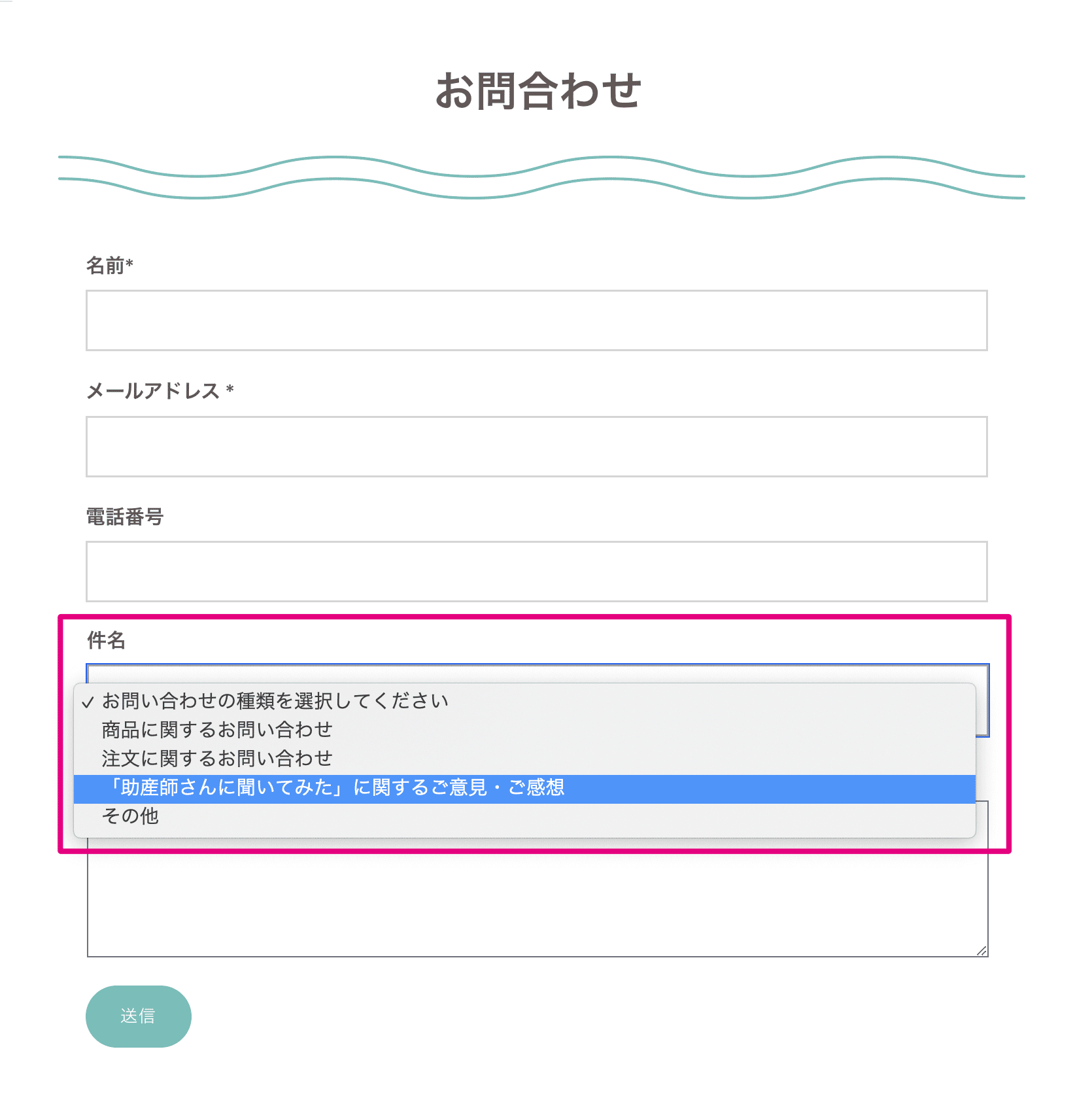
Please select your opinion or comment about "I asked midwife" in the subject field of the inquiry form, enter the content, and send it to us.
- ● We may contact you to confirm the contents.
- ● We cannot promise that we will reply to you or feature you in an article, etc.
Updated on the 2nd and 4th Thursday of each month
Next time... Thursday, May 14, 2026 Update
Enjoy!



Midwife Yoko Nambu
After graduating from Tokyo Medical and Dental University School of Nursing and obtaining a national nursing license, and graduating from the Japanese Red Cross School of Midwifery and obtaining a national midwifery license, she worked as a midwife in the obstetrics and gynecology ward of Tokyo Medical and Dental University Hospital, attending over 300 births and picking up babies. After that, she established "Toraube Inc.", a consultation office mainly for women's body. As a woman's ally, she provides consultation for problems at all ages. She believes that women should understand their own body as their own. She believes that this will lead to the solution of all problems and deals with them on a daily basis.
Her hobbies include traveling with her husband, listening to movies and music, and playing healthy mahjong.
What I want you to know from my experience
supporting many mothers as a midwife.


Blog where midwives attend to the anxieties many moms and dads have about raising their children

