

#69
What are irregular periods


Why these problems occur'Hormones': important substances that regulate how the body works
Last time, we talked about how periods work.
If all goes well, menstruation comes reliably every month, but there are many people whose periods come late or early, or who have painful symptoms during menstruation. This time, we will look at why such problems occur.
To begin with, "hormones" are important substances that regulate how the body works. Bone and muscle growth, energy metabolism, blood pressure, appetite, and the digestion of food are also influenced by hormones. Unlike vitamins, they are not taken in from food; they are produced in the brain and in various organs. For example, "insulin" is produced in the pancreas, and "adrenaline" is a hormone secreted from the medulla of the adrenal glands, which are located on top of the kidneys. More than 100 types of hormones have been discovered to date. The amount of hormones in the blood is only about 1
spoonful compared with a 50-meter pool filled with water, yet even this tiny amount is enough to take effect. It is important that hormones stay in balance; too much or too little will affect health.
《 Female hormones 》
Among the many hormones, those produced in a woman's ovaries are called "female hormones." We discussed female hormones last time: they have the role of "the functions of pregnancy and childbirth, and of preparing the body for those functions." There are two types of female hormones: "estrogen (follicular hormone)" and "progesterone (luteal hormone)." These female hormones play an important role in supporting a lively everyday life. At the same time, because they act in extremely small amounts, even a slight imbalance can lead to various problems.
《 Changes with age 》
The amount of these female hormones secreted changes with age, and changes in estrogen in particular have a major effect on the body. When puberty arrives and estrogen secretion begins to increase, menarche (the first period) occurs. Once menstruation begins, problems such as irregular menstruation and dysmenorrhea (painful menstruation) may occur. The reproductive years in the 20s and 30s are a time when estrogen levels are high and both body and mind tend to be in good condition, but conditions unique to women, such as endometriosis and uterine fibroids, may also appear. When menopause arrives from the mid-40s to the mid-50s, the appearance of various problems known as "menopausal disorders" is closely related to the decline in estrogen. A range of symptoms appear, including hot flashes, flushing, fatigue, and insomnia. In addition, as muscle mass declines and lipid metabolism declines, more people struggle with weight gain. After menopause, the decline in estrogen also raises the risk of conditions such as osteoporosis, arteriosclerosis, and myocardial infarction.


When an illness may be hiddenAbout irregular periods
Now, we will take a closer look at irregular periods.
《 Symptoms 》
Irregular menstruation includes "polymenorrhea," in which the cycle becomes shorter than usual, at 24 days or less, and "oligomenorrhea," in which it
becomes longer, at 39 days or more. There are also symptoms such as "amenorrhea (secondary amenorrhea)," in which there is no menstruation for three months or more even though the person is not pregnant. Irregular menstruation may also be accompanied by a disrupted ovulation cycle, or ovulation may have stopped. The number of days a single period lasts may become shorter or longer than usual, and abnormal bleeding may be seen.
Frequent abnormal bleeding, when heavy, can also cause anemia. Hormone imbalance is also said to reduce bone mass and raise the likelihood of endometrial cancer. If reduced ovarian function continues over a long period, it can also become a cause of infertility.
《 Causes 》
Besides stress and excessive weight loss, causes include changes in environment, diseases of the ovaries or uterus, diseases of the parts of the brain that regulate hormones, and the effects of medications. Even a temporary disruption of the menstrual cycle due to stress or similar factors can lead to infertility if it is left untreated and a state of hormone imbalance continues for a long time. There are also cases of illnesses that require treatment, such as tumors.
○ Effects of lifestyle and environment
Dieting, obesity, stress, fatigue, changes in environment, and so on can affect hormone balance and disrupt the menstrual cycle in the short term. Excessive weight loss and excessive stress can affect a part of the brain called the hypothalamus, which regulates hormones, and may cause impaired ovarian function.
○ Ovarian diseases
Among ovarian diseases, a relatively common cause of irregular menstruation is "polycystic ovary syndrome." The cause of this disease is unknown; it is said that an increase in male hormones makes ovulation more difficult and leads to irregular menstruation or amenorrhea.
Under the influence of male hormones, symptoms appear such as thicker body hair, a tendency to develop acne, and a tendency to gain weight and have difficulty losing it. In addition, when ovarian function declines because of conditions such as ovarian tumors and premature ovarian failure (a disease in
which menopause-like symptoms occur under the age of 40), menstruation becomes irregular.
○ Diseases of other organs
Pituitary gland:The pituitary gland regulates hormones involved in menstruation. If a tumor forms on the pituitary gland, or if that tumor is removed by surgery, hormone balance can change and affect menstruation.
Thyroid gland:When thyroid function declines, prolactin may increase. Prolactin has the effects of promoting the secretion of breast milk and of suppressing pregnancy immediately after childbirth, so it normally increases during pregnancy and after delivery. If prolactin is high for some reason even when a person is not pregnant or postpartum, it can also impair ovulation and lead to irregular menstruation.
○ Effects of medications and treatment
Tranquilizers prescribed to treat depression and panic disorder can raise prolactin and stop ovulation.
Chemotherapy, radiation therapy, ovarian surgery, and similar treatments can also reduce ovarian function, impair ovulation, and lead to irregular menstruation.
○ Other causes
Pregnancy and menopause can cause menstruation to stop, but these are natural changes and are not illnesses. Also, for several years after menarche, the ovulation cycle often has not yet settled, and there are cases in which irregular menstruation may still fall within the range of normal variation.
On the other hand, what was thought to be irregular menstruation may in fact not be menstruation but abnormal bleeding. Abnormal bleeding may hide other conditions such as polyps, uterine tumors, and blood clotting disorders, so if you have any concerns, please see a doctor.
《 Tests and diagnosis 》
If menstruation is delayed, the first step is to confirm that the person is not pregnant. If she is not pregnant, diagnosis of irregular menstruation or
amenorrhea involves taking a medical history as well as tests of hormone concentrations in the blood and diagnostic imaging using ultrasound, CT, MRI, and so on. If needed, cells or tissue may be taken from the uterus for testing, and chromosomal testing may also be performed. For hormone imbalance, multiple hormone concentrations in the blood are measured in order to identify the site causing the problem (the hypothalamus, the pituitary gland, the ovaries, and so on) and the pattern of the imbalance.
《 Treatment 》
For irregular menstruation, treatment differs depending on whether the person hopes to become pregnant in the future. Irregular menstruation tends to occur soon after menarche or when menopause is near, so if severe anemia or similar problems are not seen, observation is often chosen. If an illness is the cause, or if a tumor is found in the brain, ovaries, or elsewhere, drug treatment or surgical removal may be attempted. For hypothyroidism, supplementing thyroid hormone can restore ovulation to normal. If hyperprolactinemia is caused by a medication currently being taken, reducing the dose or changing the prescription is considered while weighing the priority of the illness being treated, and a drug to lower prolactin is used as needed. Other causes are identified as well, and treatment matched to the cause is given while the situation is monitored.
Menstruation is an important barometer that reflects the health of a woman's body and mind. As we have explained, an illness may be hidden behind irregular periods. Do not leave it untreated; please see a gynecologist and consult with them.

Seeking feedback on
content and childcare issues
We are always looking for your concerns that you would like to see addressed in future issues of "Ask the Midwife". Please send us your opinions, impressions, and concerns about childcare using the inquiry form.Please feel free to contact us if you would like to receive a “Ask the Midwife” leaflet.
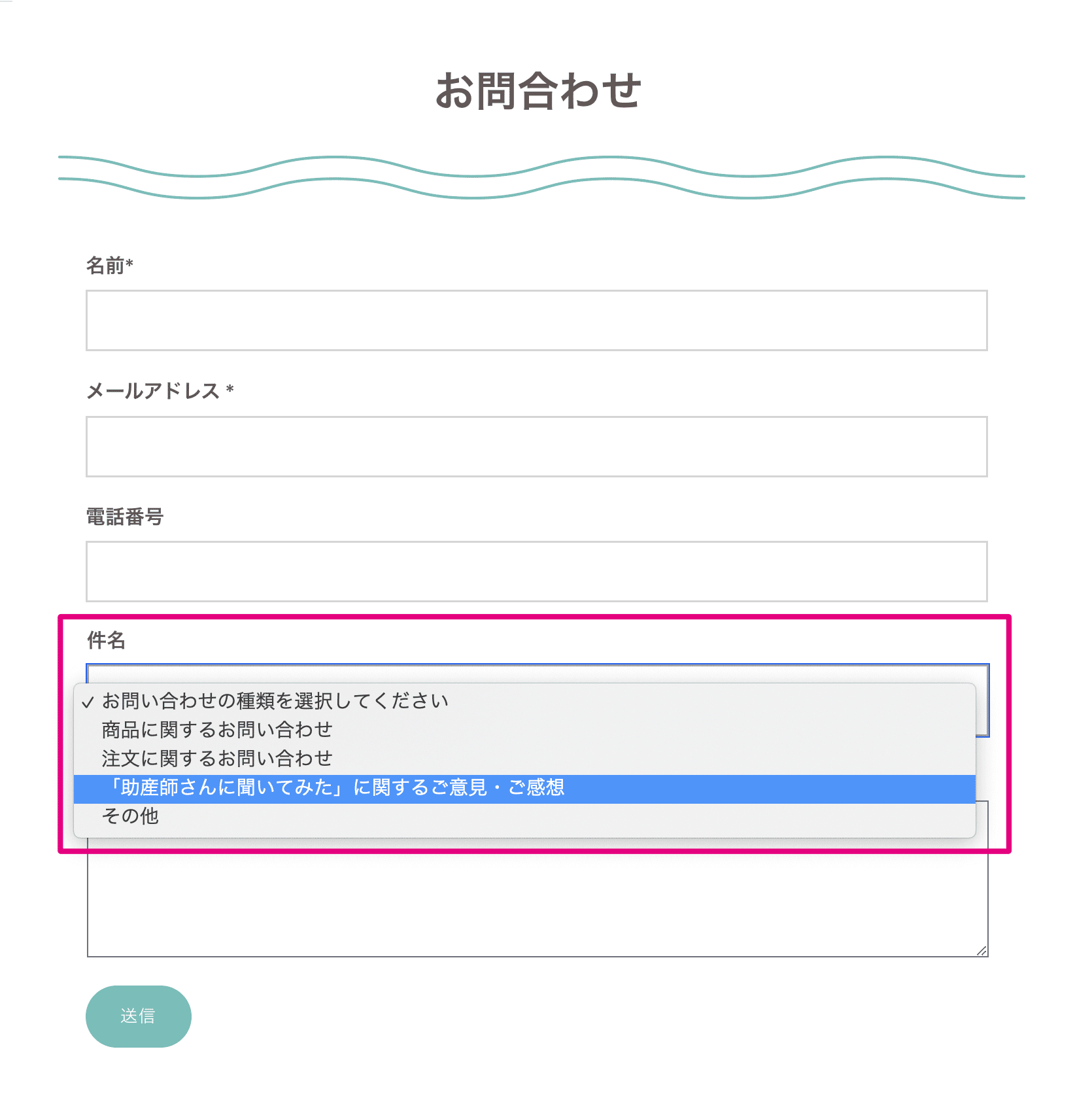
Please select your opinion or comment about "I asked midwife" in the subject field of the inquiry form, enter the content, and send it to us.
- ● We may contact you to confirm the contents.
- ● We cannot promise that we will reply to you or feature you in an article, etc.
Updated on the 2nd and 4th Thursday of each month
Next time... Thursday, September 24, 2026 Update
Enjoy!



Midwife Yoko Nambu
After graduating from Tokyo Medical and Dental University School of Nursing and obtaining a national nursing license, and graduating from the Japanese Red Cross School of Midwifery and obtaining a national midwifery license, she worked as a midwife in the obstetrics and gynecology ward of Tokyo Medical and Dental University Hospital, attending over 300 births and picking up babies. After that, she established "Toraube Inc.", a consultation office mainly for women's body. As a woman's ally, she provides consultation for problems at all ages. She believes that women should understand their own body as their own. She believes that this will lead to the solution of all problems and deals with them on a daily basis.
Her hobbies include traveling with her husband, listening to movies and music, and playing healthy mahjong.
What I want you to know from my experience
supporting many mothers as a midwife.


Blog where midwives attend to the anxieties many moms and dads have about raising their children

