

#74
The Importance of a Woman's Body


Effects Lasting Through Menopause and Old AgeHow to Spend the Time After Giving Birth
Let’s think about what it means for women to “take care of their bodies” before and after childbirth.
I imagine that from the moment a woman finds out she’s pregnant, she receives all kinds of advice from those around her—including the staff at the maternity hospital—telling her, “Take care of your body, and don’t push yourself too hard.” It’s easy to understand why it’s important to take care of your body during pregnancy. It’s best not to do anything you feel is too much for you, and during pregnancy, you’re allowed to take it easy.
So, what about after childbirth?
In this post, let’s consider what women should be doing “right now” from the perspective of their long lives as women.
From here on out, most of you will likely give birth several times, work hard to raise your children, enter menopause around age 50, go through menopause, and then enter old age, living to be 80, 90, or even 100 years old and living out your lives to the fullest.
Did you know that if you want to live to be 100—and not be bedridden, but rather live out your life in good health—how you spend this period after childbirth will have a major impact on your menopause and old age?
In Japan, there is a term called “tokoage.”
The term “tokoage” comes from the act of putting away the futon that had been left spread out so that the new mother could lie down at any time after giving birth.
This term refers to the process of gradually returning to normal daily life after childbirth. In other words, you should rest your body for the first three weeks after giving birth and then gradually resume your normal routine following the one-month checkup.
During the first three weeks after childbirth, when you’re still feeling very fatigued from giving birth, it’s best to rest your body thoroughly and then gradually adjust to your normal routine while monitoring your recovery.
Generally, it’s recommended to use the end of the first three weeks—when your body is on the path to recovery—as a guideline for resuming normal activities, and to adjust your schedule thereafter based on your individual physical condition and recovery progress.
Since this is a time when one’s physical condition isn’t yet fully restored—and recovery can be slow for some—it seems to be a reminder that it’s important not to push yourself too hard and to rest immediately when you feel tired.
Conversely, even if the delivery was very easy, the recovery process described above is still necessary.
Childbirth has always been—and continues to be—the most significant event in a woman’s life.
Since we’re accustomed to spending our days in bed these days, the term “tokoage” may sound outdated, but it teaches us something very important. You must not neglect your postpartum recovery.


It's important to live a stress-free lifeHow to Spend the Postpartum Period
The 6 to 8 weeks following childbirth are referred to as the postpartum period. To help your body recover smoothly, it’s important to lead as stress-free a lifestyle as possible during this time.
Let’s take a closer look at this period.
《 1 to 2 weeks after childbirth 》
For about two weeks after giving birth, you’ll still be feeling the physical and mental exhaustion from childbirth. Try to rest your body as much as possible by focusing solely on breastfeeding right next to your baby.
To make this possible, be sure to find someone who can help you before you give birth.
If it’s acceptable for your husband to take paternity leave and take a few months off from work, he’ll need to be able to handle all household chores by the time you’re pregnant. If he doesn’t usually do any housework, have him practice cooking, cleaning, and doing laundry starting during your pregnancy so he’ll be ready to help.
《 3 to 4 weeks after childbirth 》
Start doing simple household chores, such as cooking and laundry, little by little.
However, activities that put a heavy strain on your body—such as going out for long periods of time or standing for extended periods—are still off-limits.
Sometimes, if the delivery was easy, you might see moms going out even before three weeks have passed—perhaps to run errands at the supermarket or to pick up a few things the baby needs.
Going out is still too much for you right now. You should also avoid carrying anything heavy other than your baby.
《 5 to 8 weeks after childbirth 》
By the time you’ve completed your one-month postpartum checkup, your physical strength will have recovered significantly, but it’s said that it takes anywhere from three months to a year after giving birth before you truly feel like you’ve recovered to the same level as before pregnancy. Be sure to take your physical condition into account and avoid overexerting yourself.
Gradually expand your range of activities while paying attention to the nature of your lochia and how well your physical strength is recovering.


It may also be due to how you spend your time after giving birthUrinary Incontinence After Menopause
I used to run a telephone counseling service called “Women’s Health Counseling Center,” and during that time, I received a great many inquiries about urinary incontinence from women going through menopause or beyond.
It seems they’re often startled when they sneeze, cough, or laugh out loud and suddenly realize, “Wait, what?!” as they experience urine leakage.
This phenomenon can also occur after childbirth, but it usually goes away as the body recovers postpartum.
However, it tends to reappear during menopause and beyond, and this is partly due to how women care for themselves after giving birth.
《 Stress Urinary Incontinence 》
The reason we can hold our urine without leaking, even when it accumulates in the bladder, is that the muscles surrounding the urethra—known as the urethral sphincter and pelvic floor muscles—contract to tightly close off the urethra.
The pelvic floor muscles are a collective term for several muscles located at the base of the pelvis; these muscles form a hammock-like structure that supports the bladder, uterus, and rectum, preventing them from sagging.
In addition, they play a role in controlling urination and bowel movements by tightening and relaxing the urethra and anus.
The most common cause of urinary incontinence is the weakening of these pelvic floor muscles. When the pelvic floor muscles weaken, the ability to tighten the urethra also weakens, making urinary incontinence more likely.
The pelvic floor muscles tend to weaken during pregnancy, childbirth, and menopause. This is due to the hormone relaxin, whose secretion increases during pregnancy; it relaxes the pelvic floor muscles to facilitate the delivery of the baby.
Although the muscles gradually recover after childbirth, overexerting yourself during this period can cause them to remain weakened.
Furthermore, during menopause, a sharp decline in the secretion of the female hormone estrogen leads to a decrease in muscle mass and makes the pelvic floor muscles more prone to weakening.
The pelvic floor muscles support the internal organs. When these muscles weaken, the internal organs can descend downward. If this condition worsens, it can lead to pelvic organ prolapse, in which the bladder, rectum, or uterus protrude from the vagina.
To prevent such things from happening—and to lead a healthy life—how you spend your postpartum period is extremely important.
During this time, in particular, you’ll want to take it easy, tune in to how your body is feeling, and spend time taking good care of yourself.

Seeking feedback on
content and childcare issues
We are always looking for your concerns that you would like to see addressed in future issues of "Ask the Midwife". Please send us your opinions, impressions, and concerns about childcare using the inquiry form.Please feel free to contact us if you would like to receive a “Ask the Midwife” leaflet.
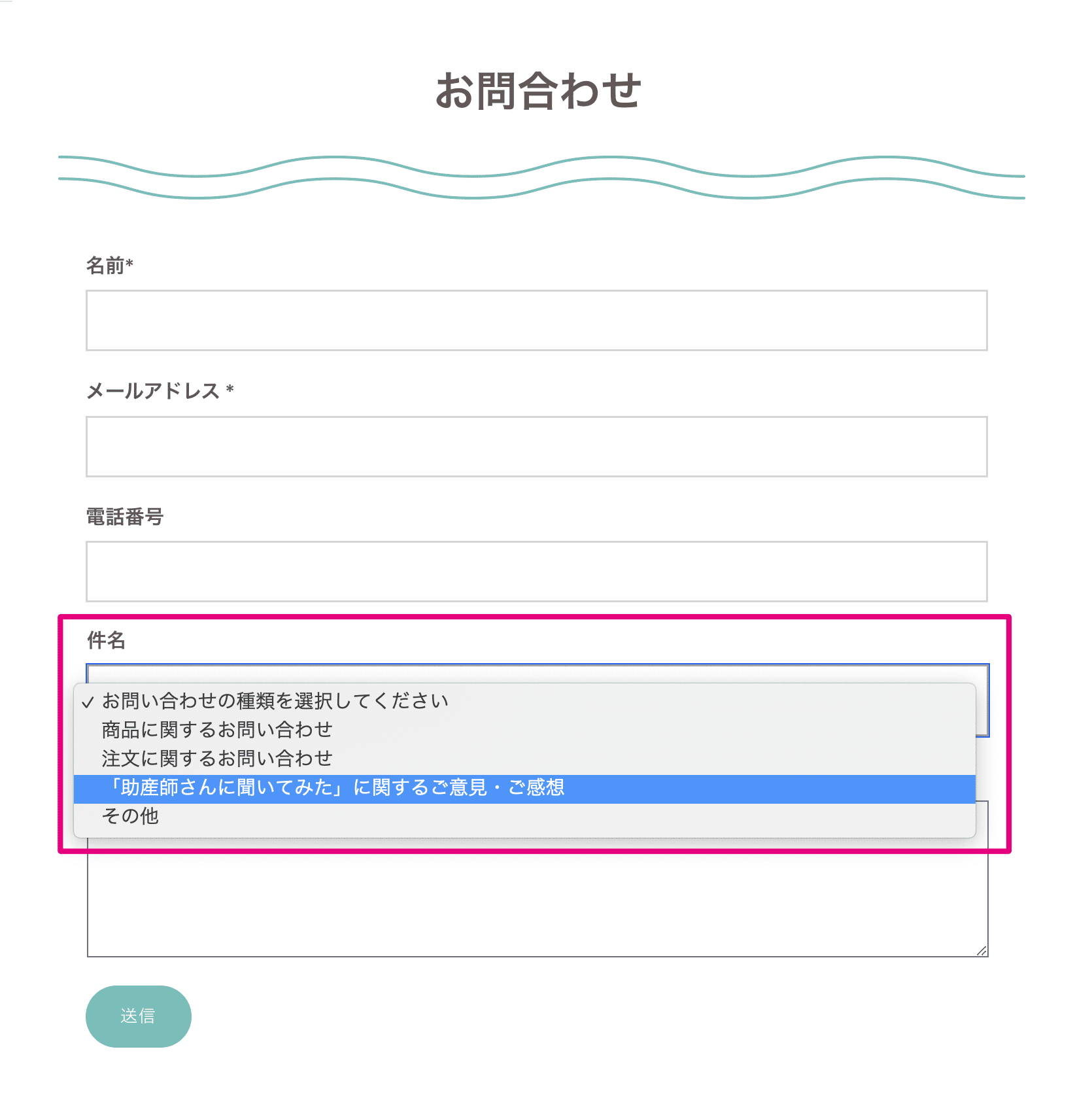
Please select your opinion or comment about "I asked midwife" in the subject field of the inquiry form, enter the content, and send it to us.
- ● We may contact you to confirm the contents.
- ● We cannot promise that we will reply to you or feature you in an article, etc.
Updated on the 2nd and 4th Thursday of each month
Next time... Thursday, December 10, 2026 Update
Enjoy!



Midwife Yoko Nambu
After graduating from Tokyo Medical and Dental University School of Nursing and obtaining a national nursing license, and graduating from the Japanese Red Cross School of Midwifery and obtaining a national midwifery license, she worked as a midwife in the obstetrics and gynecology ward of Tokyo Medical and Dental University Hospital, attending over 300 births and picking up babies. After that, she established "Toraube Inc.", a consultation office mainly for women's body. As a woman's ally, she provides consultation for problems at all ages. She believes that women should understand their own body as their own. She believes that this will lead to the solution of all problems and deals with them on a daily basis.
Her hobbies include traveling with her husband, listening to movies and music, and playing healthy mahjong.
What I want you to know from my experience
supporting many mothers as a midwife.


Blog where midwives attend to the anxieties many moms and dads have about raising their children

